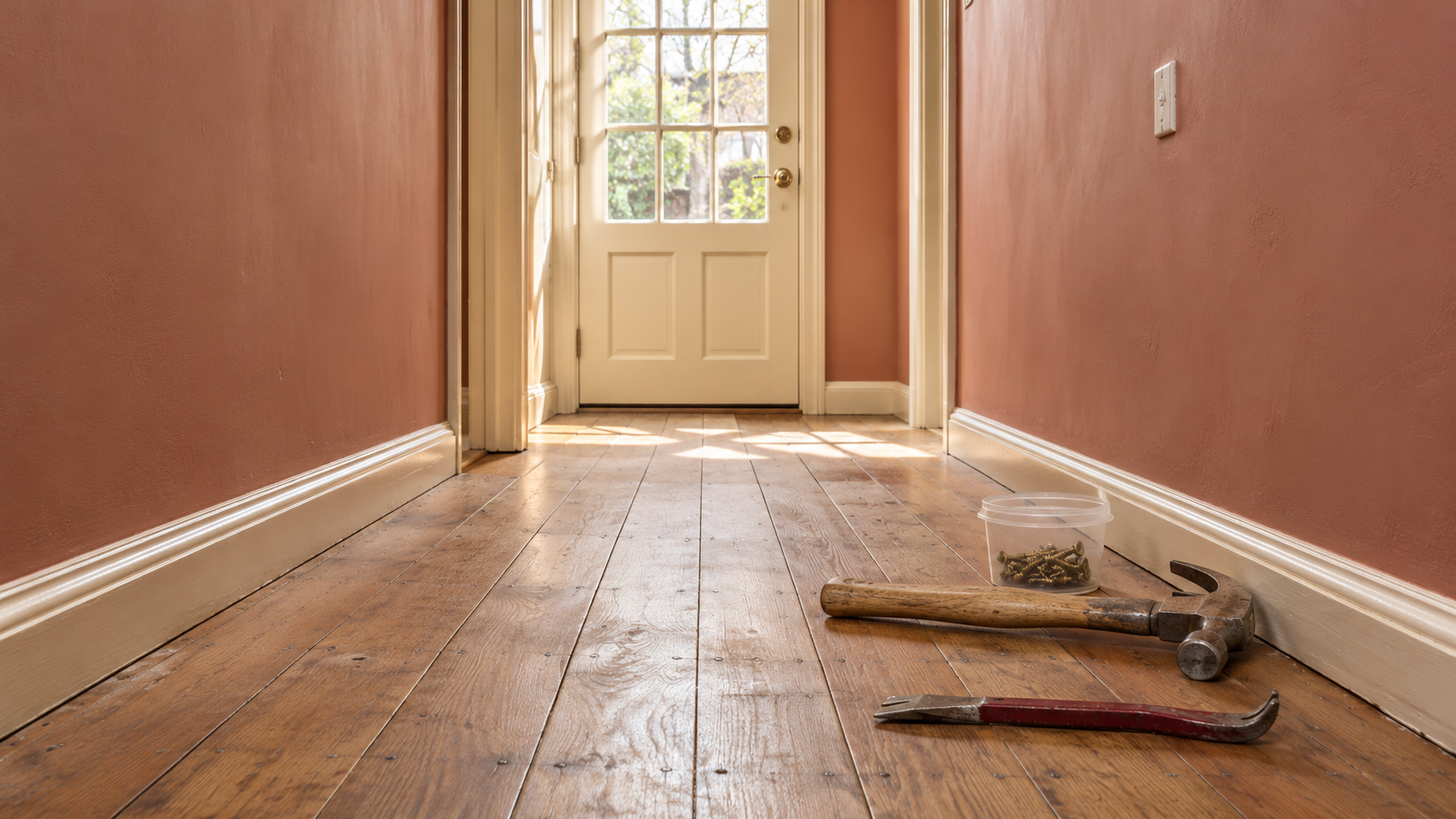
You know the spot. The step outside the kids' room that squeaks every night, or the hallway that announces anyone walking to the kitchen at 2 a.m. Plenty of homeowners hope new carpet will finally quiet it down.
It won't. A squeak comes from the floor underneath the carpet, not from the carpet itself. Thicker carpet and pad can muffle it a little, but the noise is still there, and now it sits under brand-new carpet that nobody wants to pull back up.
The good news: the day your old carpet comes up is the best chance you will ever get to fix it.
With the old carpet and pad removed, the subfloor is fully exposed. An installer can see the boards, find the joists underneath and fasten the floor down properly, in minutes per spot. Once the new carpet is down, the same repair has to be done blind, through the carpet, with special tools and a lot more guesswork.
Under your carpet and pad is a subfloor, usually plywood or OSB panels, fastened to wooden beams called joists. Squeaks happen when those parts move against each other.
This is a quick repair once the old carpet is up. The usual process:
In most rooms this adds only a small amount of time to install day. Like the rest of the floor prep, it happens after the old carpet comes out and before the new pad goes in. For the full sequence, see how long carpet installation takes.
If you are not replacing your carpet, squeaks can be fixed through it. Repair kits such as Squeeeeek No More use special scored screws and a small depth-control fixture. You find the joist, drive the screw through the carpet and subfloor into the joist, and the head snaps off just below the surface, so it hides in the carpet fibers. This Old House has demonstrated the method on camera.
It works well, but it is slower and fiddlier than fixing an exposed floor, and you are working blind. Before driving any screw, make sure you know what runs under that spot, such as pipes, wiring or ductwork. If you are planning new carpet within the next year or two anyway, waiting and fixing it properly on install day is the cleaner option.
Most squeaks are just annoying. But tell your installer, or call a contractor, if you notice any of these:
These can mean damaged subfloor or structural issues, which need repair before any new flooring goes down. It is far better to find them now than six months after the new carpet is installed.
Stairs squeak for the same reason: a loose tread rubbing on the frame below it. When stair carpet is replaced, the treads are exposed and can be screwed down at the same time. If you are weighing new carpet against hard flooring for your stairs, see carpet vs. LVP on stairs.
When you get a carpet quote, mention any squeaks you know about, and ask:
A good installer will be glad you asked. Squeak-free floors make their work look better too. Measuring your rooms first? Our guide on how much carpet you need walks you through it.
Carpet Zone installs carpet across Atlanta, Marietta, Roswell, Sandy Springs and Alpharetta, and we check the floor underneath before new carpet goes down. Tell us where your floors squeak, and we will include it in your plan.
Call +1 770-609-5675 or request a free estimate to get started.

