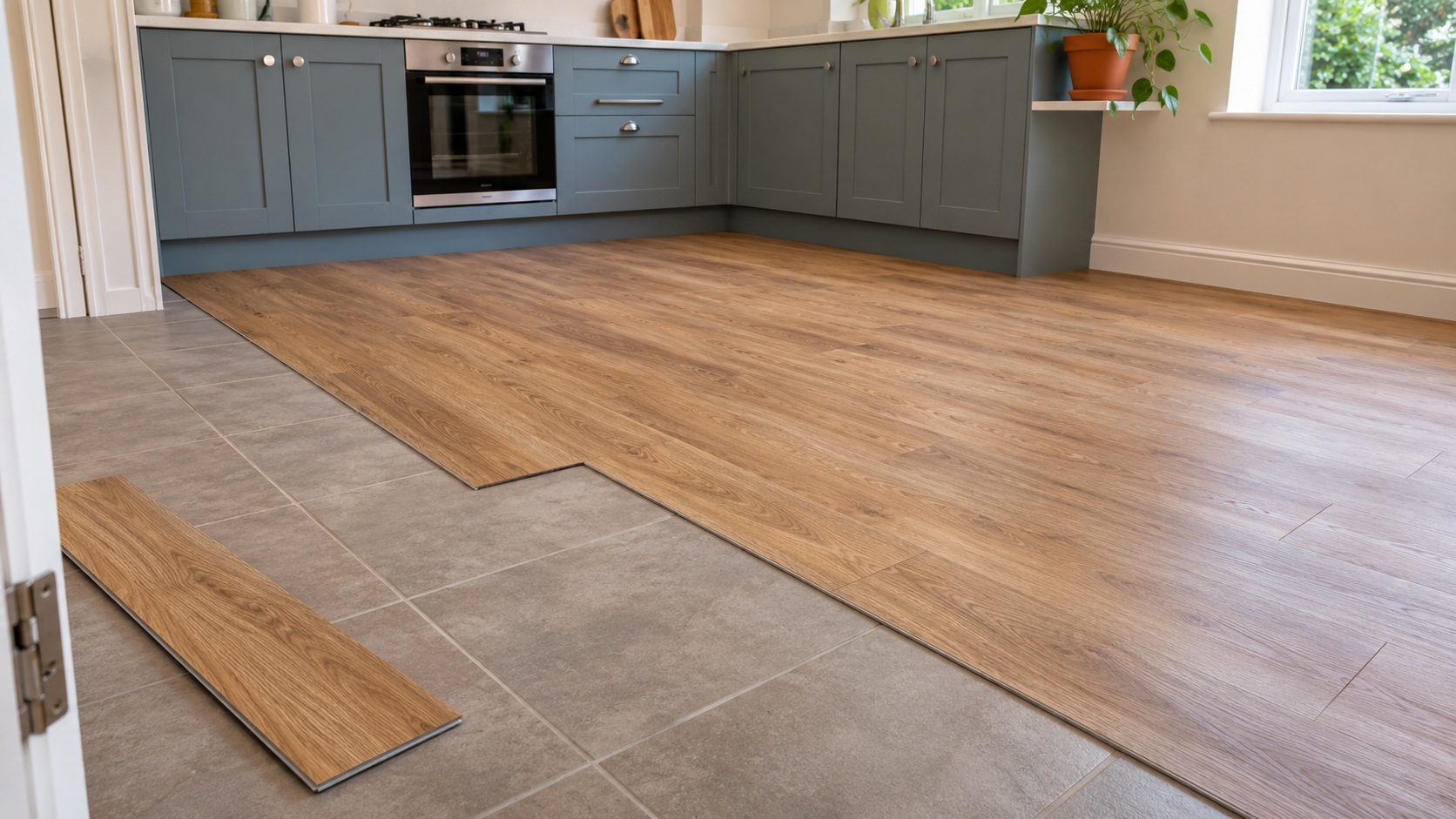
That beige ceramic tile has been in the kitchen since the house was built. It is cold underfoot, the grout never looks clean, and you are ready for the warm wood look of luxury vinyl plank (LVP). But tearing out tile is loud, dusty and slow. So the big question is: can you just put the new floor right on top?
Often, yes. Many LVP products can be installed over existing ceramic or porcelain tile, as long as the tile is solid, flat and clean.
But "often" is doing a lot of work in that sentence. Each manufacturer sets its own rules, and some are strict. If the tile fails any of the checks below, installing over it can lead to a floor that flexes, clicks, shows grout lines or even loses its warranty coverage.
Walk the floor and tap each tile with a rubber mallet or the handle of a screwdriver. A hollow, rattling sound means a tile has come loose from the floor below. This Old House recommends fixing a few loose tiles first, and removing the tile altogether if many are loose. Long cracks running across several tiles can mean the floor underneath has shifted, which needs attention before anything goes on top.
LVP planks lock together and float over the floor below, so they need a flat base. Many manufacturers, including Shaw for its Floorte line and COREtec, require the floor to be flat within 3/16 inch over 10 feet, or 1/8 inch over 6 feet. Tiles with edges that sit higher than their neighbors (installers call it "lippage") can create bumps you will see and feel through the new floor.
This is where brands disagree, so read the guide for the exact product you choose:
If deep grout lines are not filled, they can "telegraph," showing through the vinyl as faint lines over time.
LVP over tile adds the thickness of the planks to the floor that is already there. Check:
If your tile has radiant heating underneath, check the LVP manufacturer's rules carefully. STAINMASTER, for example, says the heating system's temperature must not exceed 85°F, and that its vinyl should not be installed directly over heating elements.
This is the check most people skip. STAINMASTER's installation guide states that choosing to install over any existing floor covering releases the manufacturer from responsibility for problems that result. Other brands allow tile underneath as long as it is well bonded, clean and flat. Before you buy, read the installation and warranty sections for your exact product, and make sure your installer does too. Our guide to SPC vs. WPC vinyl can help you narrow down the product type first.
Covering usually makes sense when the tile is solid and flat, the room is on one level with no tight door clearances, and your chosen LVP's guide allows it.
Removing usually makes sense when many tiles are loose or cracked, the floor is uneven, you suspect water damage underneath, or the extra height causes problems at doors, appliances or stairs.
If the tile can stay, a good installer will typically:
This prep is what separates an LVP floor that feels solid for years from one that clicks and flexes in the first summer. Floors in Georgia also move with the seasons, so a flat, stable base matters even more here; see Georgia humidity and floors.
If you are still deciding, our pros and cons of luxury vinyl planks covers the trade-offs. Covering wood floors instead of tile? Read can you install LVP over hardwood.
Carpet Zone installs LVP across Atlanta, Marietta, Roswell, Sandy Springs and Alpharetta. We will check your tile, tell you honestly whether it can stay or needs to go, and give you an itemized quote either way.
Call +1 770-609-5675 or request a free estimate to get started.

