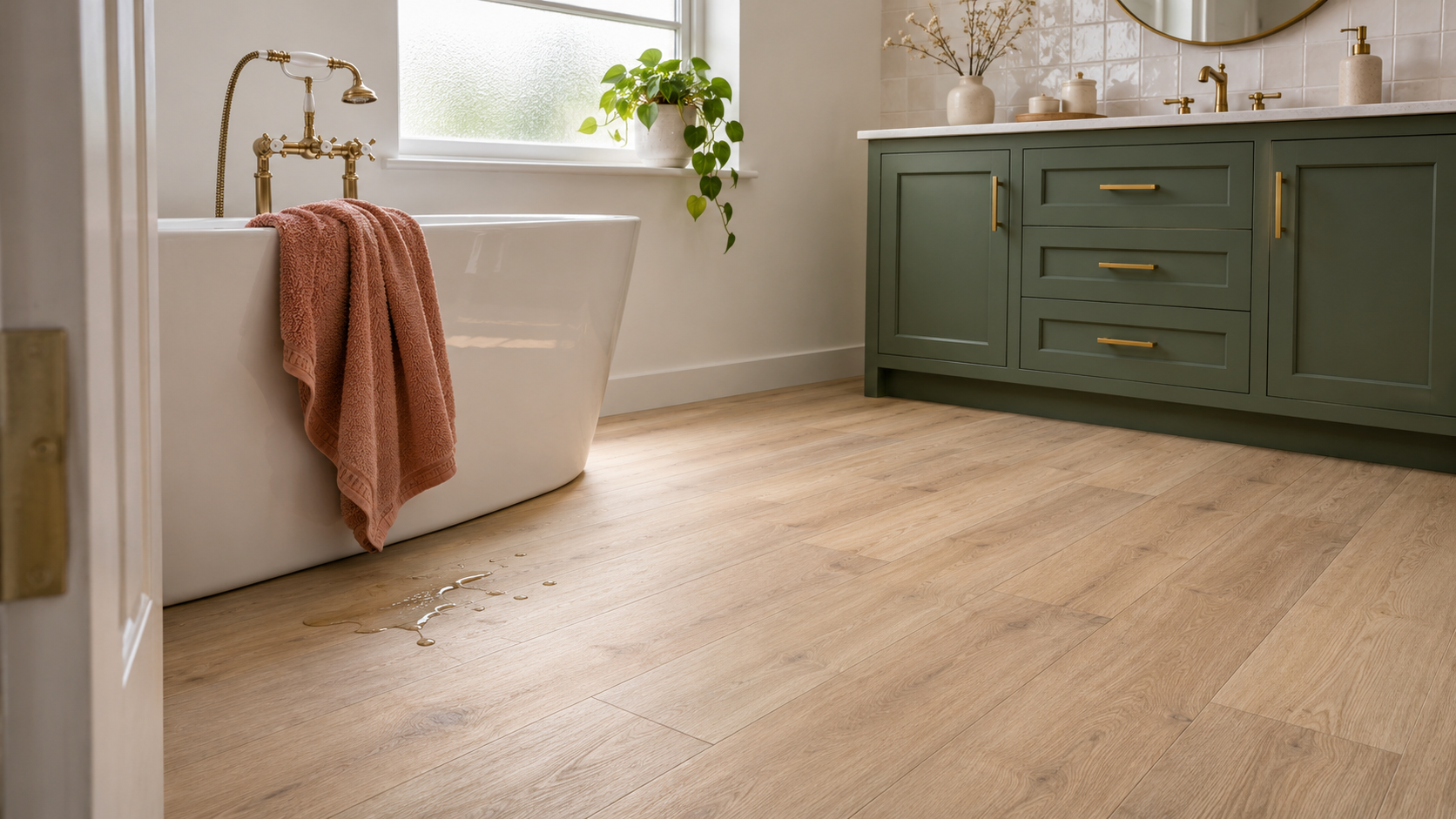
Splashes from the tub. Drips from wet towels. A toilet that sweats every summer. Bathrooms are tough on floors, which is exactly why so many homeowners ask whether the luxury vinyl plank (LVP) they love in the kitchen can go in the bathroom too.
Yes, LVP is a great choice for most bathrooms. Waterproof vinyl plank will not swell or warp from everyday splashes, it feels warmer than tile, and it is easy to clean.
But there is a catch hiding in the word "waterproof." The planks are waterproof. The floor underneath them is not. Whether your bathroom floor lasts for years or ends up with hidden mold comes down to how it is installed, especially at the edges.
Read any LVP warranty closely and you will see the same idea: the planks are protected from water that lands on top of them, often called "topical" water.
In plain terms: a spilled glass of water wiped up quickly is no problem. A toilet supply line that leaks behind the toilet for a week is a different story.
Most bathroom LVP is a floating floor. The planks click together and rest on the subfloor, with a small gap left around the edges so the floor can expand and contract. That gap is where trouble starts:
Once water is under the planks, it has nowhere to go. That is how a bathroom with a perfectly good-looking floor can end up with a damp, moldy subfloor underneath.
This is the most important bathroom step. LifeProof's instructions say to fill the expansion space around potential wet areas with 100% silicone caulk. Pergo's WetProtect instructions require the entire perimeter to be sealed with its molding system or 100% silicone, and specifically say not to use acrylic sealant. The gap stays flexible, so the floor can still move, but water cannot get in.
The toilet comes out, and the floor goes underneath it. LifeProof's instructions say to leave the proper expansion space around the toilet flange, seal it with silicone, and not to bolt the toilet down through the vinyl. This keeps the floor free to float and seals the spot where leaks usually start.
A floating floor must not be pinned down by heavy fixed cabinets. Built-in vanities usually go in first and the floor is installed around them with an expansion gap, while vanities on legs can often sit on top. Check your product's guide.
If the old floor is coming up, it is the perfect time to look for soft spots or old water damage around the toilet and tub. Fix those first. Floating a new floor over damp or rotted subfloor just hides the problem.
Not every vinyl product is rated for every wet area. STAINMASTER, for example, says its vinyl should not be installed inside showers. LVP is for the bathroom floor, not the shower floor. A rigid-core product is a common choice for bathrooms; our SPC vs. WPC vinyl guide explains the difference.
In Atlanta's humid summers, good ventilation matters too. Run the bathroom fan during and after showers to help everything dry out. For more on how humidity affects floors, see Georgia humidity and floors.
LVP fits most bathrooms. Tile can still make more sense for a walk-in or curbless shower area, a wet room, or a bathroom where the floor regularly gets soaked. If you are weighing LVP more broadly, our pros and cons of luxury vinyl planks is a good place to start.
Carpet Zone installs LVP across Atlanta, Marietta, Roswell, Sandy Springs and Alpharetta. We check the subfloor, seal the edges and fixtures, and install to the manufacturer's bathroom guidelines so your floor stays dry underneath, not just on top.
Call +1 770-609-5675 or request a free estimate to get started.

